Most people don’t start shopping for blinds because they’re chasing “energy efficiency”. They start because a room feels too hot in the afternoon, too cold in the morning, or just hard to live in comfortably. The heater runs longer than it should, the sun hits the couch like a spotlight, and you can feel that cool glass temperature the moment you walk past the windows.
At that point, custom blinds' energy efficiency becomes more than just a feature on paper. A blind is not insulation in the same way a wall is, but it does change what happens at the window. When the fit is right and the material is chosen for the room, it slows down heat movement and reduces how quickly your indoor temperature swings. If you are seeking that sweet spot of temperature in your home, then blinds can help contribute to achieving this.
In simple terms, it helps your home hold onto the comfort you’re already paying for. This is something the team at Harrisons Curtains sees regularly during in-home consultations across New Zealand.
Why Windows Are Usually the Problem Spot
Windows behave differently from the rest of the house. Even in newer builds, glazing is still one of the easiest places for heat to move through because glass transfers heat faster than insulated walls. Add in little air gaps around frames, and you often get that “cold strip” near the window in winter. Depending on where you are in New Zealand, our winters can be quite crisp.
Summer is a different kind of challenge. Sunlight heats the glass, then the warmth radiates inside and builds up in the room. West-facing rooms tend to feel this the most in the late afternoon, especially in summer when the sun is sitting lower and pushing right into the space.
This is where insulating window coverings help. The goal is not to make the window perfect. It’s to slow things down. A fitted covering reduces direct radiant heat, limits draught movement, and traps a still layer of air between the room and the glass. This can be particularly helpful in kiwi rooms like the lounge or any area that may get quite a lot of sunlight. By trapping the air between the room and the glass, you can control the movement more easily.
That still air layer matters more than people think. Air that stays still insulates better than air that keeps circulating.
Custom Fit Is Where the Efficiency Comes From
A lot of blinds look similar until you see them installed.
Off-the-shelf blinds can sit slightly away from the frame, or leave small gaps down the sides. Those gaps let air move behind the blind, and once air is moving, you lose the insulating effect you were hoping for. It’s not a dramatic failure. It’s just that the blind never quite does the “temperature job” properly.
Custom blinds are measured to the actual window. That sounds obvious, but it’s what closes the gaps and makes the blind behave more like a barrier. When the blind sits closer to the frame, it traps a thin pocket of still air between the fabric and the glass, which helps reduce heat transfer. In winter, that means less warmth slipping out. In summer, it means less heat pouring in.
This is the practical reason custom blinds energy outcomes improve with custom fitting. It’s not just the fabric, it’s the fit. If you are choosing something like roller blinds, that fit becomes even more important because a small gap at the top or sides is enough to let heat and light creep through.
Which Blinds Actually Insulate Better?
Not every blind is built to insulate. Some are mainly for privacy and glare control, which is still useful, but the energy benefit tends to be smaller.
Honeycomb designs, such as Thermacell blinds, are usually the strongest performer when insulation is the priority because they trap air inside their structure. Think of it like built-in air pockets. That trapped air slows heat movement in and out of the room. In cooler parts of the country, this style is often used in bedrooms and living rooms where you want warmth to stay put.
Blockout options help in a different way. They cut down direct sun, which reduces radiant heat gain and glare, especially in rooms that get saturated by afternoon sun. They also help with heat loss at night when the window is covered properly, but they’re not as “insulating” as honeycomb designs because they don’t trap air in the same structured way.
Layering is where you often see the biggest improvement. A blind close to the glass plus a layer of curtains inside the room reduces heat movement more effectively than a single treatment. That layered approach is one of the clearest examples of insulating window coverings working together rather than acting alone. If you’re specifically looking at winter performance, our article on do curtains help to keep heat inside your home goes deeper into how lining weight and fabric choice affect retention.
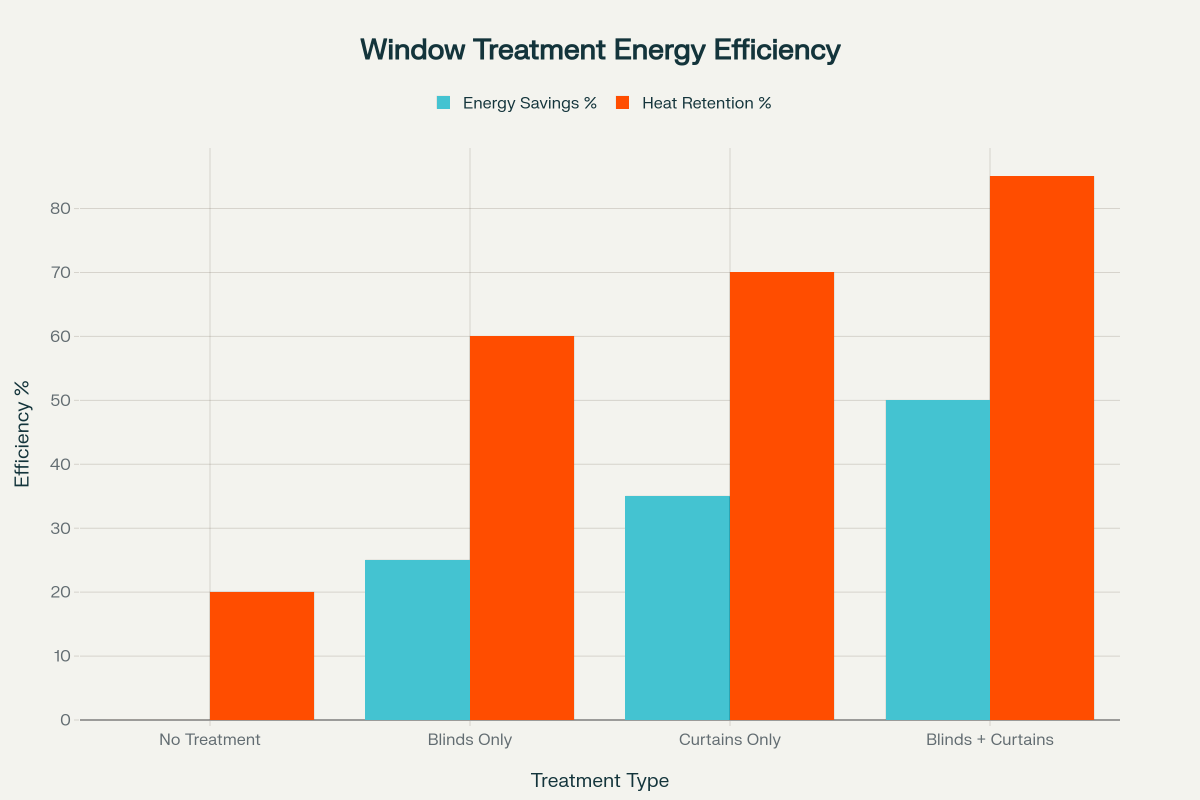
When each setup is compared side by side, the impact becomes easier to see. Moving from no treatment to blinds, then curtains, and finally a combined system shows how both energy savings and heat retention increase as layers are added.
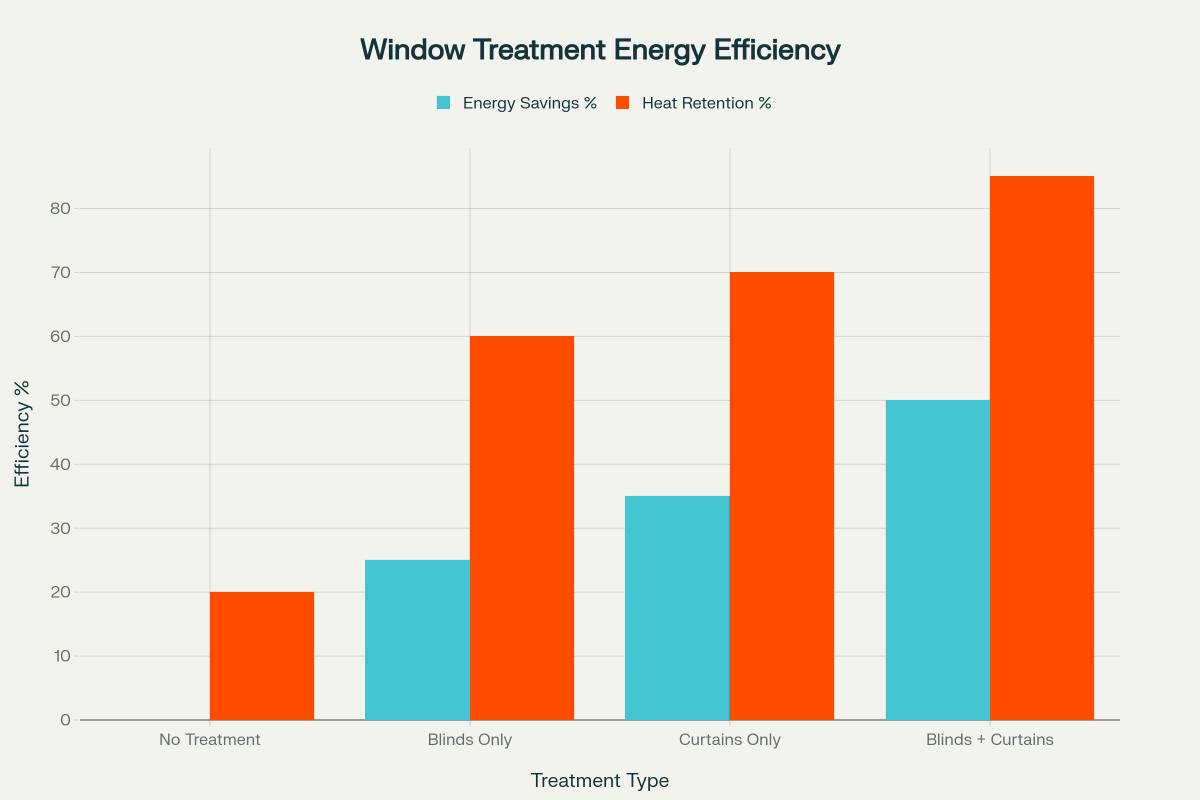
Layering blinds and curtains does more than soften the look of a room. It reduces heat transfer at the glass and limits air movement inside the space, which supports more stable indoor temperatures throughout the year. In homes with large glazing areas or strong afternoon sun, that additional layer can make a meaningful difference to comfort over a season.
Winter and Summer Use Makes a Bigger Difference Than People Expect
Even the best blind will not do much if it is used inconsistently. This is the part many people skip because it feels like common sense, but it affects results.
In winter, the easiest win is closing blinds before dusk. Once the sun drops, the glass cools quickly, and the room starts losing warmth through the windows. Closing coverings earlier helps trap that warmth inside while the room is still comfortable.
In summer, it’s about timing again, but in reverse. If you wait until the room is already hot, you’re playing catch-up. Lowering blinds before the hottest part of the day, especially on north and west-facing windows, reduces heat build-up before it becomes a problem.
This is also where custom advice matters, because a west-facing lounge in Auckland behaves differently from a south-facing bedroom in Christchurch. The same product can perform very differently depending on orientation, glass size, and how the room is used. Harrisons understands these key differences and caters curtains and blinds to each unique home and location in New Zealand.
What Energy Efficiency Looks Like in Real Life
Most homeowners don’t see “energy efficiency” as a line item. They feel it.
A room stays warmer for longer once the heater turns off. The heat pump does not have to kick in as often. Summer glare is reduced, and the room feels easier to sit in during the afternoon. Even small changes can add up across a season because windows are a daily, repeating source of heat gain and heat loss.
This is the point where custom blinds energy benefits make sense. The aim is not to promise a perfect result for every home. The aim is to improve comfort and reduce the workload on heating and cooling by making the window behave more like the rest of the room.
When blinds are measured properly and chosen to suit your exposure, they tend to do their job quietly. A free in-home consultation with Harrisons Curtains & Blinds allows measurements to be taken properly and recommendations to be tailored to your region, whether that’s Auckland, Wellington, or one of our other locations across New Zealand. You stop thinking about the windows so much, which is usually the best sign the setup is working.
FAQs
Do custom blinds really improve energy efficiency?
They can, mainly because the tighter fit reduces gaps that allow air movement around the window. Less air movement usually means better temperature stability.
Are honeycomb blinds the most insulating option?
They are often one of the strongest options because their structure traps air in pockets, which helps reduce heat transfer.
Do blinds help in summer as well as winter?
Yes. They reduce radiant heat gain when used early enough in the day, particularly on north and west-facing windows.
Is layering blinds and curtains worth it?
Often, yes. Layering tends to improve performance because it reduces heat transfer at the glass and also slows air movement inside the room.
Does custom measuring matter that much?
It does. Even small gaps can reduce insulation performance, so accurate measurements and correct installation make a noticeable difference.